Meyer lemons arrive in a narrow window each winter: thin-skinned, deep orange-yellow, and fragrant enough that you can smell one from across the kitchen. They make a marmalade so floral it barely resembles the bitter, bracing spread most people know. They also behave differently in the pot. The acid is gentler, the peel is softer, and the set can be shy. The fix isn't a longer boil — it's a shorter cook with a little help from added pectin, plus two or three moves that keep bitterness where it belongs.
What Makes Meyer Lemons Different
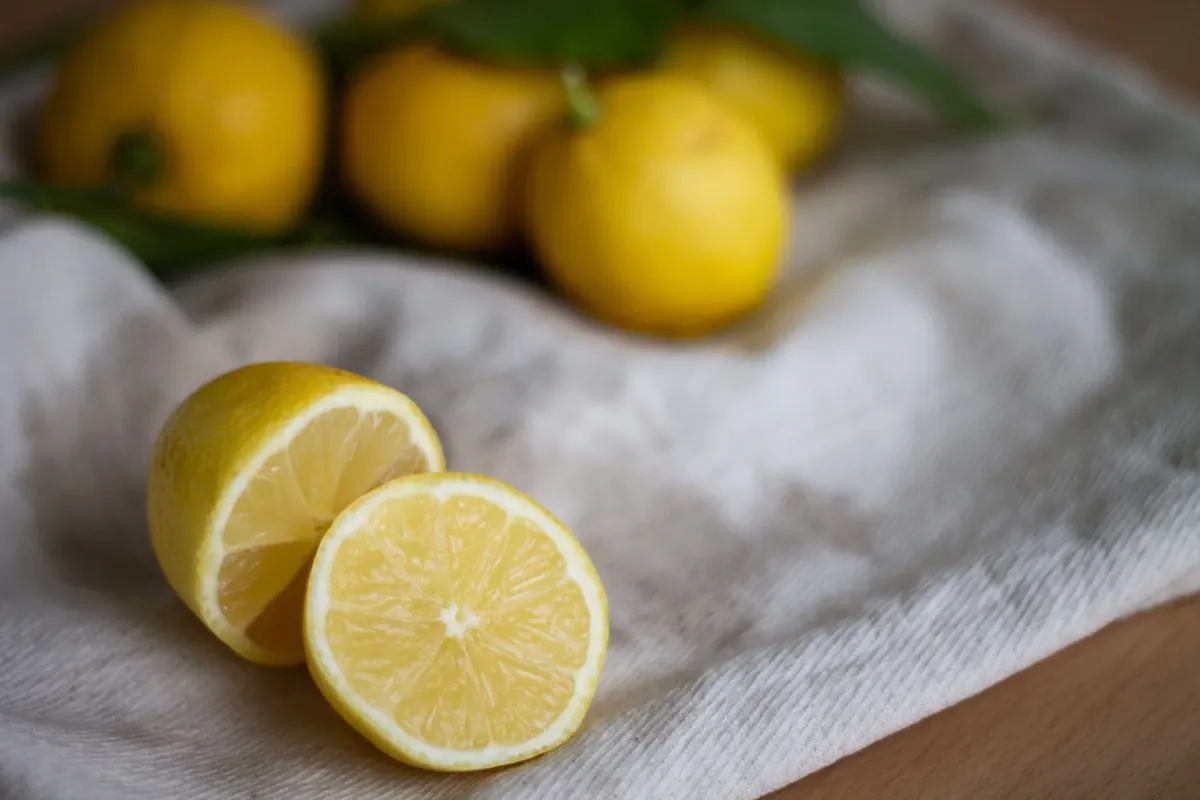
A Meyer lemon is a lemon crossed with a mandarin, and it shows. The skin is thin and glossy, the pith underneath is a narrow band rather than a thick white cushion, and the juice is sweeter and less sharp than a Eureka or Lisbon. That thin peel is the reason traditional marmalade methods fight you: there is simply less of the pectin-rich white tissue to coax a firm gel out of, and less acid to help that gel form.
The aroma is the other variable. Those floral, almost herbal oils live in the zest, and they are volatile. Boil a Meyer lemon marmalade for forty-five minutes the way you would a Seville orange and you cook the best part straight out of it.
The Low-Pectin Method, Explained
So we borrow structure from a pouch instead of from the fruit. Adding liquid pectin lets you pull the marmalade off the heat after a short, hard boil — roughly ten minutes from sugar to jar — which keeps the peel tender, the color bright, and the perfume intact. You also get a set you can count on, even if the fruit is very ripe or the weather has been wet.
The trade-off is texture. Pectin-set marmalade is softer and more spoonable than a long-boiled one, closer to a thick preserve than a jelly. For Meyer lemons, that softness works in your favor: it spreads easily on toast and lets the aroma come through instead of sealing it under a wall of sugar.
The Recipe
This makes 4 to 5 half-pint jars. Weigh the lemons if you can; Meyer lemons vary a lot in size.
Ingredients
- 2 lb (900 g) Meyer lemons, about 8 to 10
- 4 cups (950 ml) cold water, plus more for blanching
- 3½ cups (700 g) granulated sugar
- 1 pouch (3 oz / 85 ml) liquid pectin
- 2 tablespoons bottled lemon juice
- ¼ teaspoon fine sea salt
Method
- Scrub the lemons, trim the ends, and halve them lengthwise. Slice crosswise as thin as you can manage, about ⅛ inch, into half-moons. Pick out the seeds and tuck them into a small square of cheesecloth; trim away any thick chunks of core pith and add those to the bundle too.
- Put the slices in a pot, cover with cold water, and bring to a boil. Drain. Repeat once. This double blanch is the single biggest lever you have on bitterness.
- Return the slices to the pot with the 4 cups of fresh cold water and the seed bundle. Simmer gently for 25 to 30 minutes, until the peel is fully tender and looks translucent.
- Lift out the bundle, squeeze it against the side of the pot with a spoon, and discard it. You should have roughly 3 cups of liquid and fruit.
- Stir in the sugar, lemon juice, and salt. Cook over medium-low heat, stirring, just until the sugar dissolves completely — two or three minutes. Don't let it boil before that happens.
- Raise the heat and boil hard for 8 minutes, stirring often so nothing catches on the bottom.
- Add the pouch of liquid pectin all at once and stir it through. Bring back to a full rolling boil and boil for exactly 1 minute, stirring constantly.
- Test the set (below), then skim off the foam. Take the pot off the heat and let it sit for 5 minutes before stirring once — this distributes the peel so it doesn't all rise to the top of the jars.
- Fill hot, sterilized jars, leaving ¼ inch of headspace. Wipe the rims, seal, and process in a water bath for 10 minutes, adjusting for altitude. Let the jars cool undisturbed for 12 to 24 hours.
Taming the Bitterness
Bitterness in citrus peel comes from the pith, the membranes, and the seeds, and it moves into the syrup the longer everything sits together over heat. Thin slicing, the seed bundle, the double blanch, and the short final boil all chip away at it. So does restraint: don't press hard on the pulp when you're squeezing the seed bag, and don't keep the marmalade at a rolling boil while you wait for a set that added pectin has already given you.
Bitterness is loudest on day one. Give the jars two weeks before you judge them — the peel softens and the hard edge rounds off.
Flavor Tips
Meyer lemon has a strong point of view, so pair it with things in the same register rather than fighting it. Additions go in at different stages, and a little goes a long way.
- Vanilla. Split one pod and add it with the sugar; fish it out before jarring. It reads as sweetness without more sugar.
- Rosemary. One 3-inch sprig during the simmer, removed before the sugar goes in. Ten minutes is plenty — longer and it turns medicinal.
- Fresh ginger. A tablespoon finely grated, added with the sugar, keeps the marmalade bright and gives it a faint warmth.
- Cardamom. Four cracked pods in the seed bundle. Subtle, and especially good on buttered toast.
- Bourbon or rye. Two tablespoons stirred in off the heat, just before jarring, so the flavor survives.
- Honey. Swap up to a quarter of the sugar for a mild honey. Expect a darker color and a slightly softer set.
- Black pepper. A few grinds at the end, which makes the marmalade a natural partner for cheese and roast chicken.
Skip cinnamon and clove, or use a single clove at most. They bury the floral note and turn the whole batch toward potpourri. Whatever you choose, taste the syrup right before the pectin goes in — that's your last clean look at the flavor.
Testing the Set and Storing the Jars
Chill a small plate in the freezer. Drop a spoonful of marmalade on it, wait a minute, and push it with your finger. If the surface wrinkles, it's done. A thermometer is more precise: 220°F (104°C) at sea level, subtracting about 2°F per 1,000 feet of elevation. With liquid pectin, don't test before the one-minute boil — the pectin needs that full rolling boil to activate.
If the marmalade is still loose after 48 hours, you can rescue it. Reheat the contents of the jars to a boil, stir in half a fresh pouch of pectin, boil hard for one minute, and rejar with new lids. Processed jars keep for
Photo: Sarah AlAmeri / Pexels