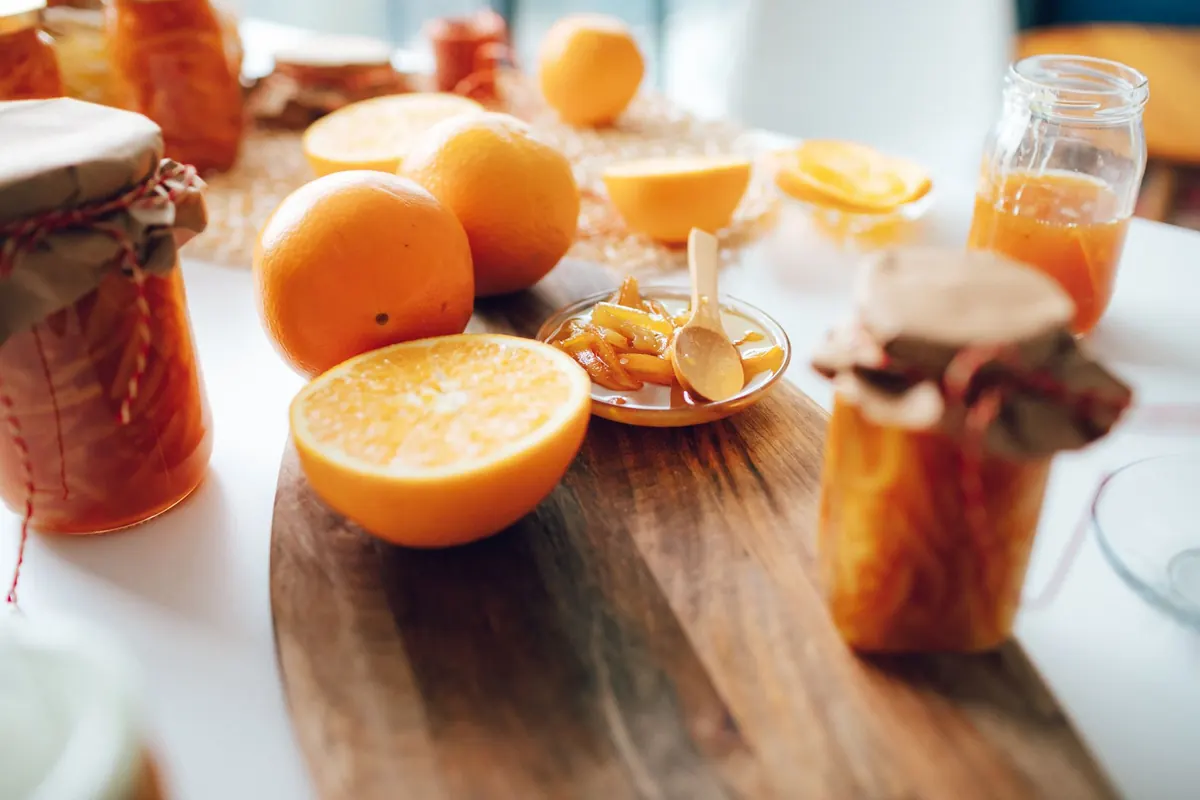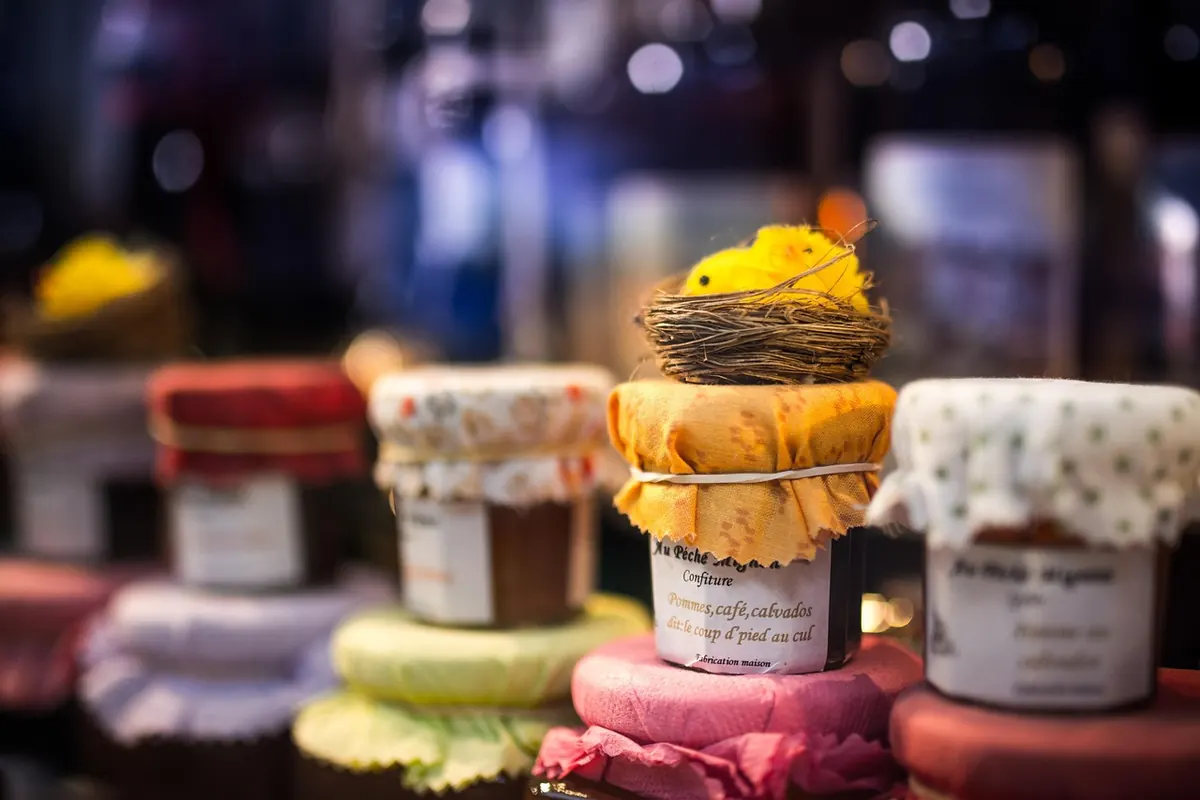
Most jars of marmalade live and die on the same piece of toast. That is a waste, because marmalade is one of the most useful things in the cupboard. It carries sweetness, bitterness, acid and a little pectin all at once, which is exactly what a glaze, a cocktail or a cheese board is short of. The trick is knowing which jar you own and where it belongs.
Two Kinds of Marmalade, Two Different Jobs
A Seville orange marmalade and a jar of onion marmalade look much the same behind glass and behave nothing alike on a plate. Both are sugar preserves with an edge, but they pull in opposite directions. The classic bitter orange sort is bright and astringent, with a bitterness that cuts through fat. The sweeter end of the shelf — blood orange, tangerine, ginger, or the blends built mostly on sugar and peel — is rounder and jammier, and needs salt or acid to keep from tasting flat. Savory marmalades, usually built on onions, chillies or tomatoes with vinegar, sit closer to a chutney: they bring salt and tang rather than perfume.
Taste a quarter teaspoon before you commit anything to a pan. If bitterness arrives first and lingers, you have a cutting marmalade: send it toward pork belly, blue cheese or a whisky drink. If sweetness dominates, treat it like jam and reach for lemon, vinegar or salt. If it is savory, think of it as a condiment that wants something plain underneath — eggs, sausages, a sliced baguette.
Glazes and Pan Sauces: Where Heat Does the Work
A glaze is the fastest way to use up a jar, mostly because marmalade brings sugar, acid and body in one spoon. The rule that matters: brush it on late. Sugar scorches long before meat is cooked through, so add it in the last ten to fifteen minutes of roasting, or thin it first with stock, vinegar or citrus juice.
A glaze that works on ham, pork loin or a tray of chicken thighs: two tablespoons marmalade, one tablespoon Dijon mustard, one tablespoon cider vinegar, a pinch of salt. Warm it until it loosens, brush it on twice near the end, then spoon the pan juices over at the table.
- Sweet glaze: two parts marmalade, one part vinegar, one part mustard.
- For salmon or trout: marmalade with soy sauce, grated ginger and rice vinegar, spread thinly and roasted hot and fast.
- For duck or lamb: bitter orange marmalade loosened with rosemary, stock and a splash of port.
- For sausages or chops: onion marmalade stirred into the pan with stock and a knob of butter — somewhere between gravy and relish in two minutes.
Sandwiches, Where Contrast Does the Work
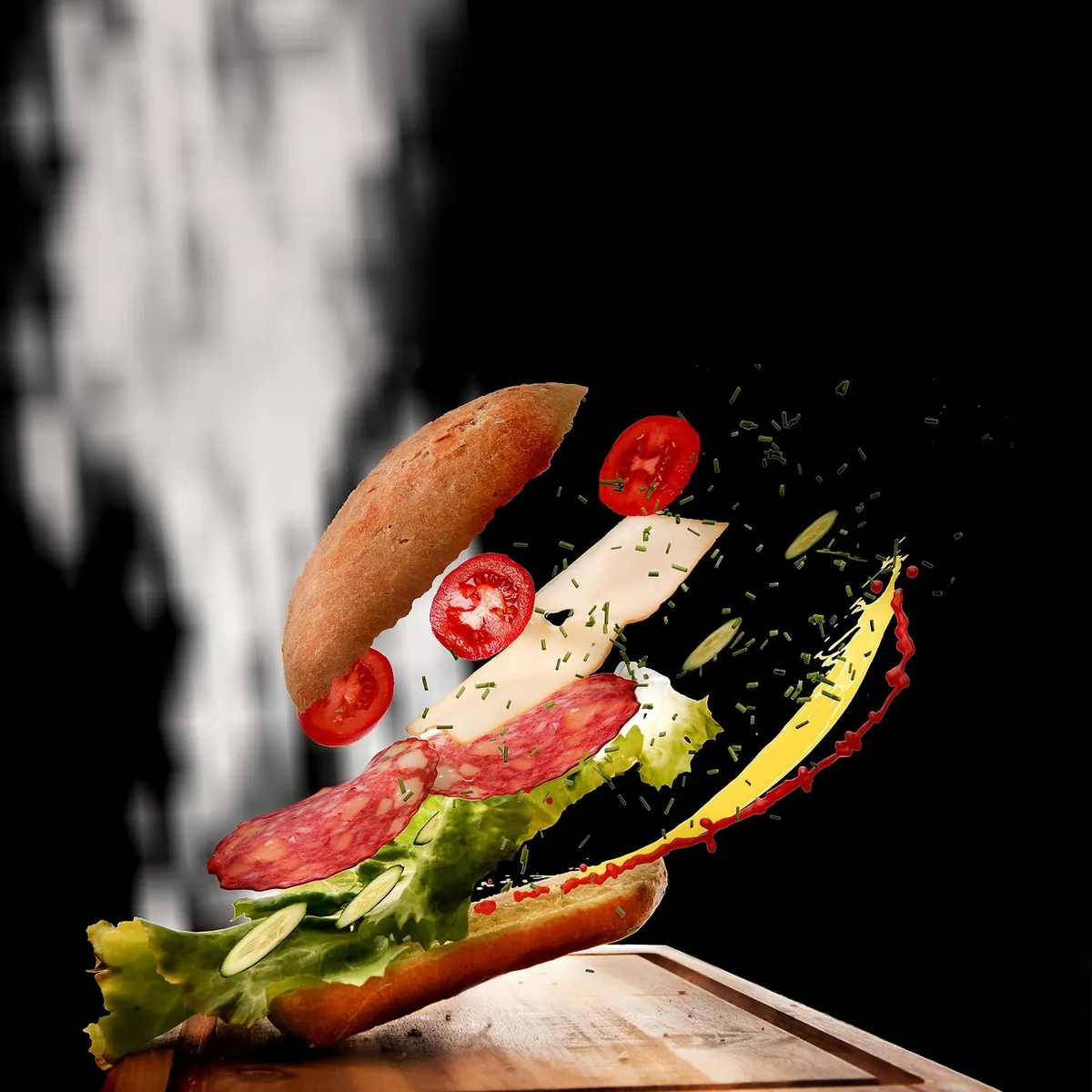
The cheddar and marmalade sandwich is famous for a reason, but most versions are too sweet and too thick. Use sharp cheddar, buttered bread, and a thin scrape of the bitterest jar you own — the marmalade replaces chutney, it does not replace the cheese. Ham, mustard and marmalade is the same idea with more salt. On the savory side, onion marmalade with cold roast beef and a handful of arugula makes a better lunch than the sum of its parts.
If you are grilling the sandwich, keep the marmalade in the middle rather than against the pan. Sugar burns and sticks before the cheese melts. Cheese on both slices, marmalade in the centre, moderate heat, patience.
Cheese Boards: Bitter With Fat, Sweet With Salt
Marmalade belongs on a cheese board in a small pot with its own spoon, not pooled across the plate. The pairing logic is simple: bitter orange marmalade next to creamy or blue cheeses, where the bitterness has fat to work against. Sweeter marmalades go beside salty, aged cheeses — a blood orange jar with aged gouda, or with a hard sheep's cheese. Onion marmalade is the reliable bridge to cheddar, manchego and comté.
Two small habits improve everything. Warm the spoonful slightly, so it spreads instead of sitting in a lump. And serve it beside the cheese on a piece of toast or oatcake rather than on top of the wedge, so each person can decide the ratio.
Cocktails and Drinks
Bitter marmalade is a genuine shortcut in the shaker. A heaped teaspoon, two ounces of whisky, three-quarters of an ounce of lemon juice and a little syrup if your jar is on the tart side, shaken hard with ice, makes a rough-and-ready marmalade sour. Strain it twice if you do not want shreds in your teeth.
Simpler still: stir a teaspoon into a gin and tonic, or into a highball of whisky and soda with a strip of orange peel. For something spicier, a teaspoon of chilli marmalade in a margarita or a Bloody Mary adds heat and body at once. Because sugar levels vary wildly between jars, always taste and adjust with more lemon rather than more syrup. A non-alcoholic version — marmalade, lemon, soda, plenty of ice — works just as well on a warm morning.
Breakfast Beyond the Toast Rack
Since the toast is already covered, use marmalade where it adds texture rather than just sweetness. Swirl a spoonful through thick yogurt with toasted almonds. Stir it into porridge at the end, off the heat, so the shreds stay intact. Warm it with a little water and butter and pour it over pancakes or French toast instead of syrup. A spoonful dropped into the pan while bacon fries gives you a glaze and a sauce in one step.
Savory jars shine here too. A fried egg on toast with onion marmalade underneath is a five-minute breakfast that tastes like something you planned. Chilli marmalade on a bacon sandwich solves the dry-bread problem in a single stroke.
Keeping a Jar in Rotation
A few habits will keep marmalade moving through your kitchen instead of hardening at the back of a shelf. Taste before you cook with it, because two jars labelled the same thing can differ by a mile. Keep a small jar for the table and a larger one for glazes. Thin marmalade before it meets high heat. Balance it — acid for sweet jars, salt for bitter ones. Refrigerate after opening, and don't be shy about finishing a jar in a single roasting tin.
Start with one swap this week: the mustard on your next cheese sandwich, or the syrup on your next batch of pancakes. Marmalade is not a niche preserve. It is a seasoning with a peel in it, and it deserves more than the corner of a toast rack.
Photo: Sponchia / Pixabay