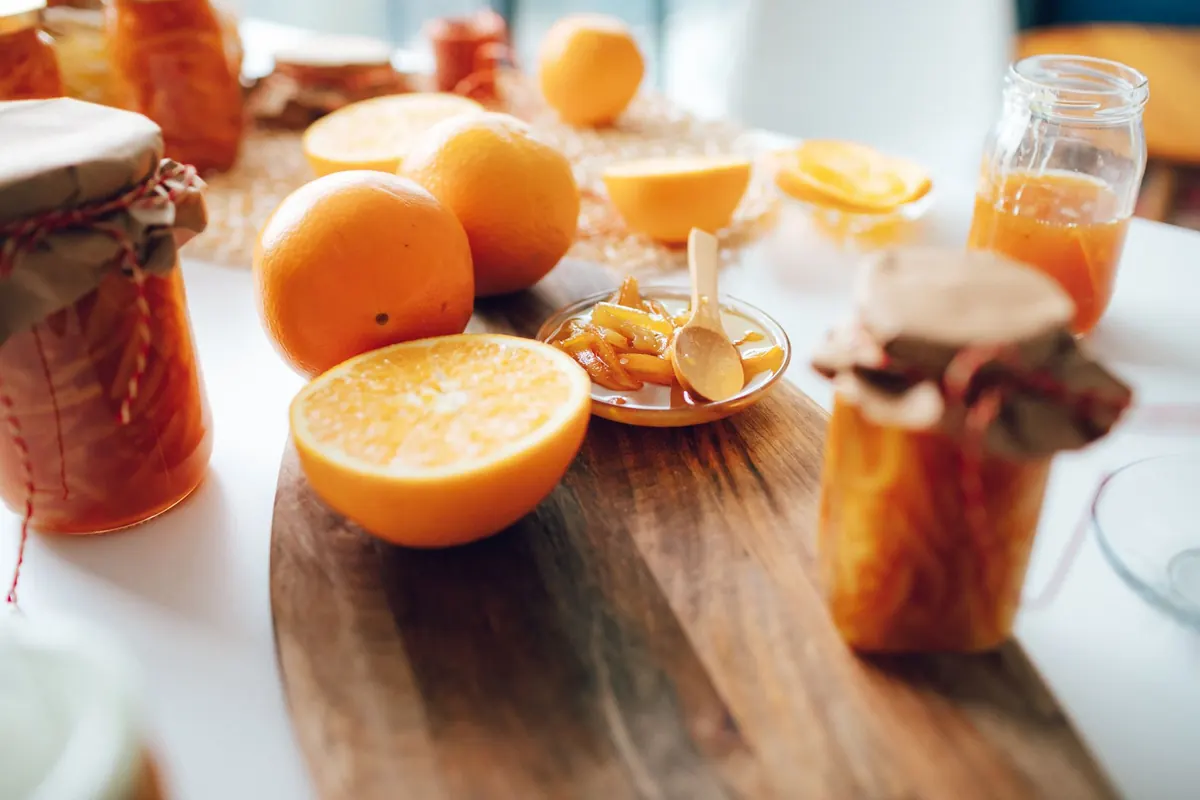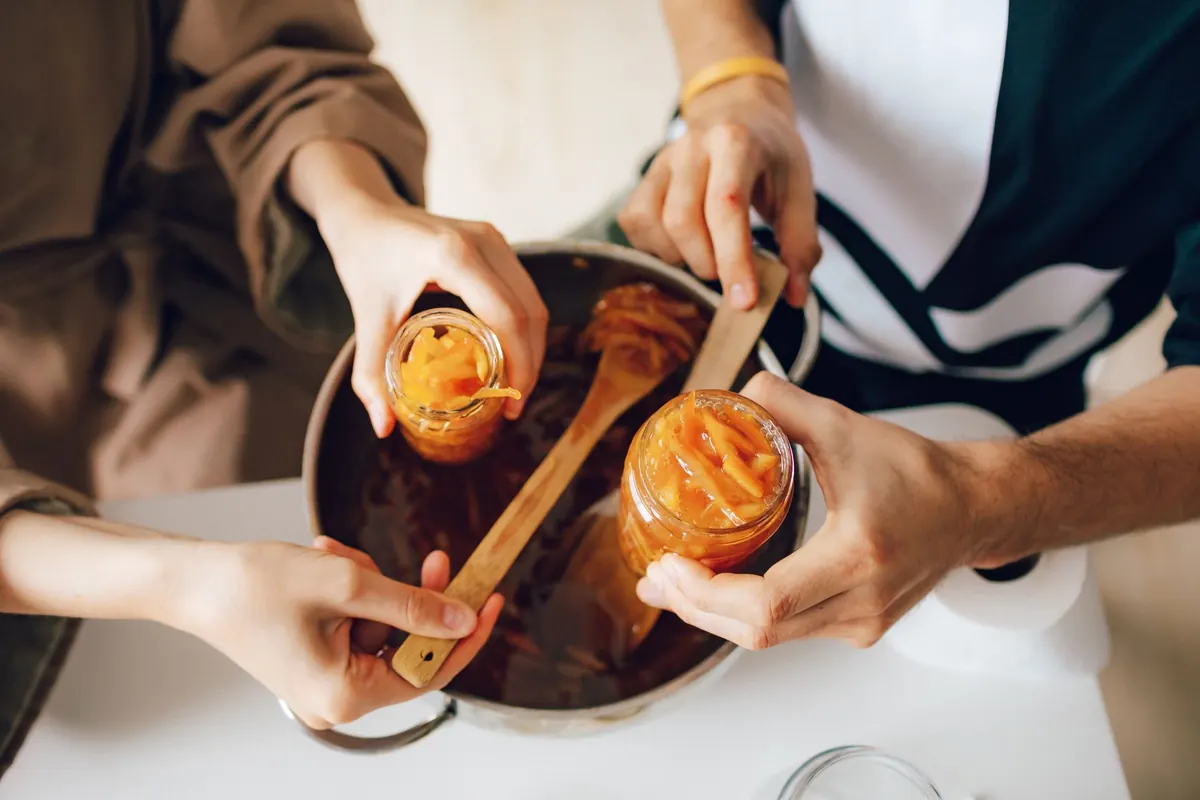
Boiling water canning has a reputation problem. It sounds like laboratory work, and the warnings attached to it — botulism, cracked jars, spoiled batches — make a simple pot of Seville orange marmalade feel like a liability. It isn't. Marmalade is one of the most forgiving things you can put through a water bath, because citrus is acidic and the sugar is high. What it asks for is attention to a handful of details, in the same order, every time. Here is that list.
Why Marmalade Goes in a Water Bath, Not a Pressure Canner
Two things make marmalade safe to process in boiling water: acid and sugar. Citrus sits well below the pH 4.6 line that separates high-acid foods from low-acid ones, and the finished preserve is thick with sugar. Together they make the jar an inhospitable place for the bacteria that pressure canning exists to destroy. What you are still fighting is mould and yeast, plus any airborne spores that land in the jar while you fill it. A boiling water bath handles all of that: it heat-processes the marmalade, drives out air, and creates the vacuum that pulls the lid down tight.
This changes the moment you start adding low-acid ingredients in quantity. A spoonful of ginger or a splash of whisky is fine in a tested recipe. A marmalade stretched with carrot, onion or roasted pepper is a different calculation entirely. If you want to experiment that way, follow a recipe that has already been tested for water bath canning rather than adjusting one yourself.
The Gear Checklist
Before the fruit is cut, make sure you have everything within arm's reach. Canning goes badly when you are hunting for a funnel with sticky hands.
- A water bath canner with a rack. It needs to be deep enough to hold jars with one to two inches of water covering the lids. A deep stockpot works if it has a lid and something to keep jars off the base — a rack, or a folded tea towel you are willing to sacrifice.
- Canning jars without chips. Run a finger around every rim. A nick means a failed seal, and failed seals mean fridge marmalade. Standard canning jars are built for repeated boiling; reused pasta sauce jars are not.
- New two-piece lids. The flat discs are single-use. The screw bands can be reused until they rust or bend.
- A wide-mouth funnel, a jar lifter, and a plastic spatula or bubble remover. Metal spoons scratch the inside of jars and can chip the rim.
- A recipe with a stated processing time. Not a time you half-remember from a video.
- A kettle of boiling water on standby, for topping up the canner.
Sterilizing Jars and Preparing Lids
Do you actually need to sterilize?
If your filled jars will boil for ten minutes or longer — which is typical for marmalade — current canning guidance says the jars need to be clean and hot, but not sterilized. If your recipe calls for a shorter process, sterilize. Either way, hot jars are non-negotiable: pouring hot marmalade into a cold jar is a good way to hear a crack.
The three workable methods
Wash jars in hot soapy water and rinse well. Then choose one: boil them upright in the canner for ten minutes (adding time for altitude), run them through a hot rinse cycle and leave them in the closed dishwasher until you fill them, or hold them in a low oven. Oven canning has fallen out of favour with many canning authorities because dry heat stresses the glass, so if you are new to this, stick with the boiling water or the dishwasher.
Lids
Modern two-piece lids come with a sealing compound already in place, and boiling them can soften it. Wash the discs in warm soapy water, rinse, and keep them in a bowl of warm — not boiling — water until you need them. Bands just need to be clean.
Filling Jars Without the Panic
- Work with one jar at a time and keep the rest hot.
- Sit the jar on a folded towel, set the funnel in place, and ladle marmalade to about a quarter inch from the rim. That headspace is what lets the vacuum form.
- Slide a plastic spatula down the inside of the jar and ease out trapped air bubbles. Do this gently; you are releasing air, not stirring.
- Wipe the rim with a damp cloth. Any sticky smear left behind will hold the lid off the glass and break the seal.
- Centre the disc on the jar and screw the band on until it is finger-tight. Tight enough to hold, loose enough that air can escape during processing.
- Lower jars onto the rack with the lifter, spaced so they do not touch each other or the pot.
Processing: The Part Where You Watch a Pot Boil
Water first, jars second. The canner should have one to two inches of water above the lids once everything is loaded, and the water should be hot but not yet at a rolling boil when the jars go in.
Bring it to a full rolling boil, cover, and start timing only then. Keep it boiling for the whole process — a pot that stops boiling is a pot that is no longer doing its job. Processing time depends on jar size, altitude, and whether your recipe uses added pectin, so take the number from your recipe or a current canning guide. Most marmalade recipes land in the ten-minute range at sea level, with extra minutes added at higher elevations.
When the time is up, turn off the heat and let the jars sit in the water for five minutes before lifting them out. Set them upright on a towel, well apart, and leave them alone for twelve to twenty-four hours. Do not tighten the bands, do not wipe the jars down, and do not tip them to check for leaks. The seals are forming right now, and the quiet ping from the kitchen is the sound of it working.
Seals, Storage, and the Jars You Should Throw Out
After a day, press the centre of each lid. It should be concave and should not flex up and down. Then unscrew the band and lift the jar by the edge of the flat lid, holding it just above the counter. If the disc holds, the seal is good. If it comes away, the marmalade is still perfectly edible — refrigerate it and use it within a few weeks.
Store sealed jars without their bands, in a cool, dark, dry cupboard, labelled with the contents and the date. Quality holds best for about a year; older jars are safe but the colour and zest fade. Refrigerate after opening and use within three to four weeks.
Throw a jar out, without tasting it, if you see any of the following:
- A lid that bulges, or that has lost its vacuum and cannot be pressed down
- Sticky residue, drips or seepage around the rim or down the side of the jar
- Mould on the surface, or any discolouration that looks wrong for the fruit
- Liquid that spurts or fizzes when you open the jar
- A fermented, yeasty or simply off smell
Never taste a suspect jar to decide whether it is fine. If you are ever uncertain about a batch, discard it — and for specific processing times, altitude adjustments or spoilage questions, check a current canning guide from a food safety or extension service rather than relying on memory or a comment thread.
The Short Version
Clean, hot jars. New lids. A quarter inch of headspace. A wiped rim. A finger-tight band. A rolling boil for the full time your recipe states. Five minutes of rest in the pot, a day of rest on the counter, then a cupboard shelf out of the light.
Do those things in that order and water bath canning stops being intimidating. It becomes what it should be: the quiet, slightly smug half hour after the marmalade is made, when you stand in the kitchen listening for lids to ping and know that January's oranges will still be on the table in July.
Photo: ROMAN ODINTSOV / Pexels